

Ethical Label Market Manufacturers & Suppliers in United States
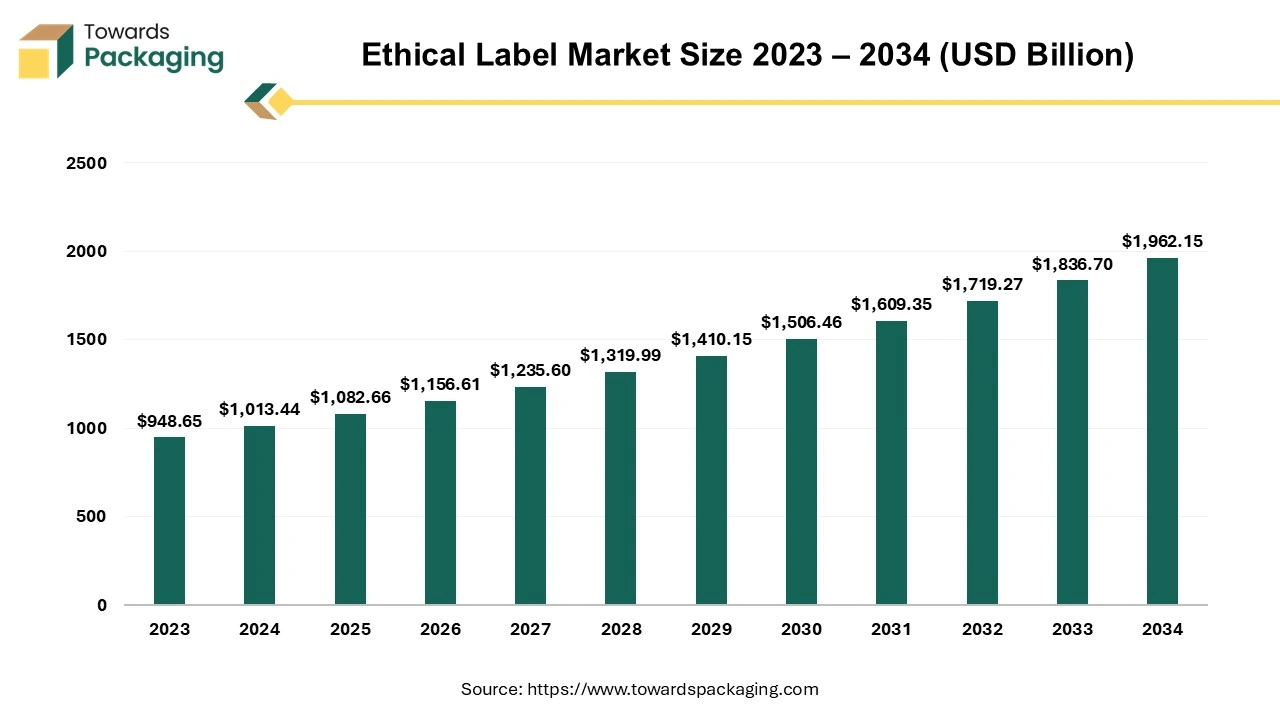
According to Towards Packaging consultants, the global ethical label market is projected to reach approximately USD 1962.5 billion by 2034, increasing from USD 1082.66 billion in 2025, at a CAGR of 6.83% during the forecast period 2025 to 2034.
Ottawa, Dec. 16, 2025 (GLOBE NEWSWIRE) -- The global ethical label market reached approximately USD 1082.66 billion in 2025, with projections suggesting it will climb to USD 1962.5 billion in 2034, according to a report from Towards Packaging, a sister firm of Precedence Research.
Request Research Report Built Around Your Goals: sales@towardspackaging.com
Key Takeaways
- North America has dominated the ethical label market, having the biggest share in 2024.
- Asia Pacific is expected to rise at a notable CAGR between 2025 and 2034.
- By label type, the organic segment has contributed to the largest market share in 2024.
- By label type, the halal segment will grow at a notable CAGR between 2025 and 2034.
- By product type, the food segment contributed the largest share in 2024.
- By product type, the beverages segment will grow at a notable CAGR between 2025 and 2034.
- By distribution channel, the offline segment has contributed to the largest market share in 2024.
- By distribution channel, the online segment will grow at a notable CAGR between 2025 and 2034.
Get All the Details in Our Solutions - Access Report Sample: https://www.towardspackaging.com/download-sample/5218
Key Technological Shifts
- Blockchain for Transparency: Brands use blockchain to verify product origins, supply chains, and ethical claims.
- QR Code Integration: Labels now include QR codes to provide instant access to product sourcing and sustainability information
- Eco-Friendly Printing Technology: Adoption of biodegradable, water-based based and low-impact inks reduces environmental footprint.
- Smart & Digital Label: NFC-enabled and digital labels allow real-time tracking and consumer engagement.
-
AI & Data Analytics: AI helps monitor compliance, detect fraud, and optimize supply chains for ethical sourcing.
Market Overview
The ethical label market is expanding as buyers favor goods that are socially conscious cruely cruelty-free, and sourced sustainably. To comply with regulations and foster trust, brands are implementing transparent labelling practices. Demand in the consumer goods, clothing, and food industries is being driven by growing awareness of ethical and environmental issues. The market is expanding more quickly thanks to technological innovations like digital and smart labels.
Market Opportunities
| Opportunity | Description | Market Impact |
| Rising consumer awareness | Growing demand for sustainable, cruelty-free, and socially responsible products. | Increased adoption of ethical labels across industries. |
| Digital & smart labeling | Use of QR codes, NFC, and blockchain to provide transparent product information. | Enhances brand trust and drives tech-enabled solutions. |
| Expansion in emerging markets | Rising disposable income and awareness in Asia-Pacific, Latin America, and the Middle East. | New growth opportunities for ethical labeling adoption. |
| Regulatory support | Governments are pushing for stricter labeling and sustainability regulations. | Encourages brands to adopt ethical certifications and labels. |
| Eco-friendly materials | Development of biodegradable, recyclable, and low-impact labels. | Supports sustainable packaging trends and reduces environmental footprint. |
| Partnerships & certifications | Collaboration with NGOs and certification bodies for authenticity. | Strengthens credibility and consumer confidence in labeled products. |
More Insights of Towards Packaging:
- High Barrier Foil Pouches Market Size, Trends, Share, Trends, Segments, and Regional Insights (NA, EU, APAC, LA, MEA)
- North America Flexible Plastic Packaging Market Size, Trends, Share, Trends, Segments, and Regional Insights (NA, EU, APAC, LA, MEA)
- Recycle-Ready Packaging Market Size, Trends, Segments, Companies, Competitive Analysis, Value Chain & Trade Analysis 2025-2035
- North America Plastic Packaging Market Size, Trends, Key Segments, and Regional Dynamics with Manufacturers and Suppliers Data
- Australia Warehouse and Storage Market Size, Trends, Segments, Regional Outlook, Competitive Landscape & Trade Data Analysis 2025-2034
- Vertical Form-Fill-Seal (VFFS) Machines Market Size, Trends, Segments, Regional Outlook, and Competitive Analysis to 2035
- Self-storage Market Size, Trends & Regional Insights (NA, EU, APAC, LA, MEA) with Segments, Value Chain, Trade Data & Competitive Analysis 2025-2034
- UK Large Cardboard Boxes Market Size, Trends, Segments, Regional Insights, Competitive Landscape & Trade Analysis 2025-2034
- Sachet Packaging Machines Market Size, Trends, Segmentation, Regional Outlook, Competitive Landscape & Global Trade Analysis 2024-2035
- Packaging Inserts & Cushions Market Size, Trends, Segments, Regional Analysis, Competitive Landscape & Global Trade Insights
- Oxygen Scavengers Market Size, Trends, Segments, Regional Insights, Competitive Landscape & Trade Analysis 2025-2034
- U.S. Cardboard Storage Boxes Market Size, Trends, Segments, Competitive Landscape Analysis 2025-2035
- U.S. Glass Packaging Market Size, Trends, Key Segments, and Regional Dynamics with Manufacturers and Suppliers Data
- Eco-Friendly Flexible Packaging Market Size, Trends, Segments, Companies, Competitive Analysis, Value Chain & Trade Analysis 2025-2035
-
Meal Prep Containers Market Size, Trends, Regional Analysis (NA, EU, APAC, LA, MEA), Segments & Competitive Landscape 2025-2034
Segmental Insights
By Label Type
The organic label segment dominates the ethical label market in 2025, as consumers began to place a higher value on products that were transparent, chemical-free free and clean. Brands in the food, personal care, and household sectors have adopted certified organic labeling due to growing consumer awareness of health, sustainability, and environmental impact. The segment's leadership was further strengthened by robust regulatory support and growing access to certified organic products.
The halal label segment is growing rapidly, driven by growing consumer confidence in quality assurance standards and an increase in the demand for certified halal-compliant products worldwide. Growing adoption in the food, cosmetics, pharmaceutical, and packaging industries helps the segment. Its growth is being accelerated by wider acceptance among non-Muslims consumers because of the benefits of hygiene, purity, and traceability.
By Product Type
The food segment dominated the ethical label market in 2025 as consumers looked for assurances regarding sustainability, safety, and clarity in products they used on a daily basis. As consumers began to choose healthier and ethically sourced food products, ethical labels like organic, non-GMO GMO fair trade, and cruelty-free became popular. The dominance of the segment is still fueled by the growing influence of conscious eating trends.
The beverages segment is growing rapidly as consumers favor ethically certified beverages such as plant-based beverages, organic juices, sustainable coffee, and functional drinks. To differentiate their products and satisfy the growing demand for transparency and ethical sourcing, brands are implementing ethical labels. Clean hydration and wellness-focused beverages are becoming more popular, which is driving the market's growth.
By Distribution Channel
The offline segment dominated the ethical label market in 2025 because customers still favor physical stores for quality comparison, ethical certification inspection, and product authenticity verifications. Supermarkets, specialty shops, and organic retail chains continue to draw large numbers of customers looking for tangible assurance and trust for products with ethical labels. Curated product shelves and high visibility support offline leadership.
The online segment is growing rapidly as e-commerce platforms offer greater accessibility, wider assortments, and transparent information on ethical certifications. Digital channels enable consumers to compare labels, read reviews, and explore new ethical brands with ease. The rise of subscription models, quick commerce, and direct-to-consumer brands is accelerating online adoption.
Elevate your packaging strategy with Towards Packaging. Enhance efficiency and achieve superior results - schedule a call today: https://www.towardspackaging.com/schedule-meeting
By Region
North America Emerges as the Powerhouse of Ethical Label
The North America region dominates the market, supported by mature consumer awareness of sustainability, animal welfare, and clean label trends. Strong regulatory framework and high trust in certified ethical standards help adoption across food, beauty, and lifestyle products. Expanding premium product line and strong retailer support continue to drive momentum in the region.
U.S. Ethical Label Market Trends
The U.S. market is witnessing strong growth as consumers increasingly prioritize transparency, sustainability, and responsible sourcing in their purchasing decisions. Brands are expanding the use of certifications such as Fair Trade, USDA Organic, cruelty-free, and carbon-neutral labels to strengthen trust and meet rising regulatory and retailer expectations. Clean-label demand is reshaping product formulations, pushing companies to minimize artificial additives and adopt clearer ingredient disclosures.
Asia Pacific Becomes the Leading Growth Driver of the Ethical Label Industry
Asia Pacific is expected to grow at the fastest CAGR, driven by growing demand for certified food and personal care products, growing awareness of ethical consumption, and rising disposable incomes. The adoption of ethical labels is increasing in major economies due to rapid urbanization and growing retail networks. To satisfy consumer expectations, local brands are also implementing standardized certifications.
India’s Ethical Label Market Trends
The market in India is growing quickly as consumer’s preference for organic, cruelty-free free and clean label products. Government reforms and rising sustainability awareness, especially among urban youth, are pushing brands to adopt transparent sourcing and eco-friendly practices. E-commerce platforms are further driving demand for verified certifications.
Europe Emerges as a Key Growth Contributor in the Ethical Label Landscape
Europe remains a notable ethical labeling region with strict EU sustainability rules and high consumer trust in certifications like EU Ecolabel, Fairtrade, and OEKO-TEX. TEX strong climate policies and demand for transparent, sustainably sourced products continue to drive market adoption.
Germany’s Ethical Label Market Trends
Germany is growing in the market due to strict national regulations and environmentally conscious consumers. Blue Angel, Fairtrade, and GOTS are well-known certifications. To live up to high standards, brands prioritize traceability, organic quality, and minimize environmental impact. In the German market, sustainable manufacturing and supply chain transparency are important differentiators. Labeling trends are still being shaped by the growing demand for low-carbon and ethically sourced goods.
Middle East & Africa Charts a Stable, Sustainable Growth Path in Ethical Labeling
MEA’s market is developing steadily, supported by rising sustainability awareness, halal certification needs, and interest in clean-label food and beauty products. Governments are tightening authenticity and safety standards, pushing brands toward better transparency. International certifications are gaining traction among premium retailers. The region is also seeing growth in eco-friendly packaging labels as part of wider sustainability goals.
UAE Ethical Label Market Trends
The UAE is one of the fastest-growing ethical label markets, driven by strong government sustainability initiatives and consumer preference for organic and eco-friendly products. Retailers increasingly adopt global certification and transparency tools to meet premium quality expectations. Smart packaging and digital traceability are gaining popularity to reassure consumers. Growing interest in wellness and ethical luxury goods is further boosting demand for certified labels.
Recent Developments in the Global Ethical Label Industry:
- In July 2025, ESCP & WRAP announced a major partnership to strengthen ethical manufacturing worker protection and ESG compliance. This collaboration aims to harmonize global certification standards for factories and improve audit transparency. It also supports brands in aligning with rising consumer expectations for ethically labeled products.
- In June 2025, OEKO-TEX celebrates 10 years of its MADE IN GREEN label, highlighting global adoption of transparent, traceable labeling. The milestones reflect growing brand participation in responsible production and chemical safety. More companies are integrating QR code-based tracking to offer consumers verifiable ethical information.
- In July 2025, Foodpharmer launched OWNs, a clean-label product, when the protein brand built on transparency and functionality. It also positions itself as a consumer-first brand appealing to those seeking simple, honest nutritional labeling.
Top Companies in the Ethical Label Market & Their Offerings:
- Nestle S.A.: The World's largest food company, known for diverse brands like Nescafe, Kit Kat, and Purina.
- Unilever: British consumer goods giant with brands including Dove, Knorr, and Magnum, spanning beauty, home care, and food.
- Danone: Global leader in dairy, plant-based products, and specialized nutrition.
- The Kraft Heinz Company: Major producer of condiments, sauces, cheese, and meals with iconic brands such as Kraft, Heinz, and Oscar Mayer.
- Kellogg's: Multinational manufacturer primarily known for cereals and convenience foods under brands like Chex and Pringles.
- General Mills: Producer of branded consumer foods, including cereals, baking mixes (Betty Crocker), snacks (Nature Valley), and pet food (Blue Buffalo).
- The Coca-Cola Company: Global beverage corporation best known for manufacturing and marketing the Coca-Cola soft drink and other non-alcoholic drinks.
- PepsiCo: Food and beverage giant with a portfolio that includes Pepsi-Cola, Frito-Lay snacks, Gatorade, and Quaker Oats.
-
Cargill Inc.: Privately held global food and agricultural corporation involved in farming services, food processing, and commodity trading.
Segments Covered in the Report
By Label Type
- Halal
- Organic
- Clean
- Sustainability and Fairtrade labels
- Animal Welfare Labels
- Vegan Labels
- Others
By Product Type
- Food
- Beverages
By Distribution Channel
- Offline
- Online
By Region
-
North America:
- U.S.
- Canada
- Mexico
- Rest of North America
-
South America:
- Brazil
- Argentina
- Rest of South America
-
Europe:
-
Western Europe
- Germany
- Italy
- France
- Netherlands
- Spain
- Portugal
- Belgium
- Ireland
- UK
- Iceland
- Switzerland
- Poland
- Rest of Western Europe
-
Western Europe
-
Eastern Europe
- Austria
- Russia & Belarus
- Türkiye
- Albania
- Rest of Eastern Europe
-
Asia Pacific:
- China
- Taiwan
- India
- Japan
- Australia and New Zealand,
- ASEAN Countries (Singapore, Malaysia)
- South Korea
- Rest of APAC
-
MEA:
- GCC Countries
- Saudi Arabia
- United Arab Emirates (UAE)
- Qatar
- Kuwait
- Oman
- Bahrain
- South Africa
- Egypt
- Rest of MEA
Invest in Our Premium Strategic Solution: https://www.towardspackaging.com/checkout/5218
Request Research Report Built Around Your Goals: sales@towardspackaging.com
About Us
Towards Packaging is a global consulting and market intelligence firm specializing in strategic research across key packaging segments including sustainable, flexible, smart, biodegradable, and recycled packaging. We empower businesses with actionable insights, trend analysis, and data-driven strategies. Our experienced consultants use advanced research methodologies to help companies of all sizes navigate market shifts, identify growth opportunities, and stay competitive in the global packaging industry.
Stay Connected with Towards Packaging:
- Find us on Social Platforms: LinkedIn | Twitter | Instagram | Threads
- Subscribe to Our Newsletter: Towards Sustainable Packaging
- Visit Towards Packaging for In-depth Market Insights: Towards Packaging
- Read Our Printed Chronicle: Packaging Web Wire
-
Get ahead of the trends – follow us for exclusive insights and industry updates:
Pinterest | Medium | Tumblr | Hashnode | Bloglovin | LinkedIn – Packaging Web Wire | Globbook | Substack | Bluesky | - Contact: APAC: +91 9356 9282 04 | Europe: +44 778 256 0738 | North America: +1 8044 4193 44
Our Trusted Data Partners
Precedence Research | Statifacts | Towards Healthcare | Towards Auto | Towards Food and Beverages | Towards Chemical and Materials | Towards Consumer Goods | Towards Dental | Towards EV Solutions | Nova One Advisor | Healthcare Webwire | Packaging Webwire | Automotive Webwire | Nutraceuticals Func Foods | Onco Quant | Sustainability Quant | Specialty Chemicals Analytics
Towards Packaging Releases Its Latest Insight - Check It Out:
- Post-Consumer Recycled Plastic Market Size, Segments, Regional Insights, and Competitive Landscape 2025-2034
- Plant-Based Plastics Market Size, Trends, Segments, and Regional Outlook 2025-2035
- Bio-Based Packaging Market Size, Trends, Segmentation, Regional Outlook, Competitive Landscape, Value Chain and Trade Analysis
- Plastic Films and Sheets Market Size, Trends, Segmentation, Regional Outlook, Competitive Landscape & Trade Analysis (2025-2035)
- Recycled Polypropylene in Packaging Market Size, Trends, Segments, Regional Insights, Competitive Landscape, Value Chain & Trade Data Analysis (2025–2035)
- Personal Care Packaging Market Size, Segments, Regional Data, and Competitive Analysis
- Thermoformed Trays Market Size, Trends, Key Segments, and Regional Dynamics with Manufacturers and Suppliers Data
- Stick Packaging Market Size, Segments, Companies, Competitive Analysis, Value Chain & Trade Analysis 2025-2034
- Retort Packaging Market Size, Share, Trends, Segments, and Regional Insights (NA, EU, APAC, LA, MEA)
- Polypropylene Foam Trays Market Size, Trends, Key Segments, and Regional Dynamics with Manufacturers and Suppliers Data
- Filling and Sealing Machines Market Size, Trends, Share, Trends, Segments, and Regional Insights (NA, EU, APAC, LA, MEA)
- Flexible Industrial Packaging Market Size, Trends, Segments, Regional Insights, Competitive Landscape & Trade Analysis 2025-2035
- Recyclable Beverage Packaging Market Size, Trends, and Global Segment Analysis 2025-2035
- North America Packaging Market Size, Trends, Share, Regional Data, Segments 2025-2035
-
Packaging Solutions Market Size, Trends, Segments, and Regional Insights 2025-2035


Legal Disclaimer:
EIN Presswire provides this news content "as is" without warranty of any kind. We do not accept any responsibility or liability for the accuracy, content, images, videos, licenses, completeness, legality, or reliability of the information contained in this article. If you have any complaints or copyright issues related to this article, kindly contact the author above.
